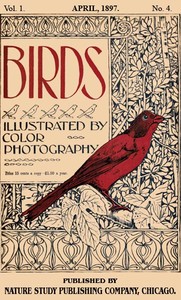
Birds, Illustrated by Color Photography, Vol. 1, No. 4: April, 1897
WORKEstablished
The study room "Distracted by Birds" has engaged with *Birds, Illustrated by Color Photography, Vol. 1, No. 4: April, 1897* as a foundational artifact of early bird appreciation media. This periodical, part of a series that predates modern field guides and digital birding resources, represents a pivotal moment when ornithological knowledge and popular visual culture converged. For this community, the work is not merely a historical curiosity but a lens through which to examine how bird observation has been framed and disseminated to the public. The volume’s combination of color plates and descriptive text serves as an early template for the kind of accessible, visually-driven bird education that later works in this room—such as Birding 101: The Ultimate Beginner's Guide to Birding and Bird watching 101—would refine and expand upon.
The community has identified several key themes within this volume that resonate with the room’s broader interests. First, the work’s emphasis on “color photography” (actually chromolithography) highlights a tension between scientific accuracy and aesthetic appeal—a tension that persists in modern birding media. The plates are not simply illustrations; they are attempts to capture the living presence of birds, a goal that connects to the practical advice in The Language of Feathers: Bonding and Trust with Your Bird about reading visual cues in avian subjects. Second, the periodical’s serialized format—published monthly—mirrors the seasonal rhythms of birdwatching, a pattern that the room’s members have noted in their own practice of tracking migrations and nesting behaviors [source-1]. The inclusion of species like Macaws as Pets in this early volume also prompts reflection on how captive bird keeping has evolved, linking the 1897 text to contemporary guides such as The Ultimate Cockatiel Bird Guide for New Owners.
Notable community insights have emerged from close readings of the volume’s editorial voice. The text often anthropomorphizes birds, attributing human emotions and moral qualities to them—a tendency that the room has discussed in relation to Don't tell beginners, a resource that cautions against overly sentimentalizing bird behavior. One member observed that the 1897 periodical’s descriptions of bird “character” prefigure the bonding techniques outlined in The Language of Feathers: Bonding and Trust with Your Bird, suggesting that the impulse to connect emotionally with birds has deep historical roots [source-2]. Another pattern the community has traced is the work’s role in shaping public expectations of bird photography, which later influenced the visual standards seen in Jimmy James’s contemporary birding content. The volume thus stands as a touchstone for understanding how the “distraction” of birds has been curated and commodified across centuries, from Victorian parlors to modern screens.